
Does air conditioning affect your home insurance?
A fitted split system rarely moves your premium, but it does belong on your insurer's record. Here is why a wall-mounted condenser is usually covered as part of the building while a ground-mounted one may not be, what the property in the open limit means, which paperwork settles a claim, and how much an install adds to your rebuild figure.
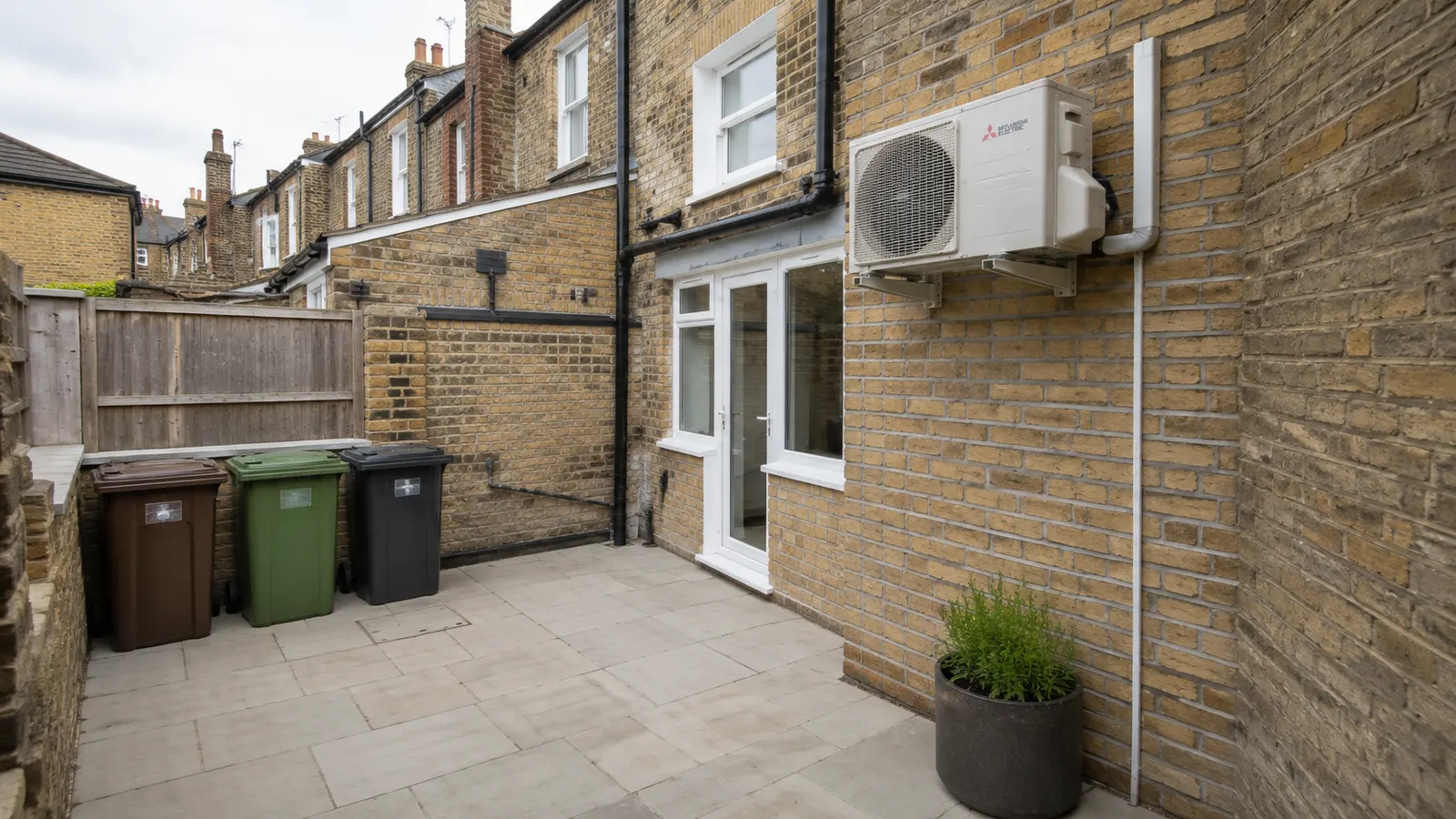
Air conditioning rarely changes what you pay for home insurance, but it does belong on your insurer’s record. The claims that go wrong are the ones nobody declared, or the ones where the outdoor unit sat on the ground and the policy never covered it there.
November is the month this comes up, because renewal letters land and people tie up loose ends before the new year. Here is what to check.
Does a split system count as an alteration?
Most policies ask whether you have made structural alterations, extensions or conversions. A split system install is none of those. The work is a 65mm core hole through an external wall, a bracket or pad for the condenser, a few metres of insulated copper, and a dedicated circuit from the consumer unit.
Insurers normally class that as an improvement rather than an alteration, in the same bracket as a new boiler or a rewire. So the honest answer to most renewal questions is no.
Tell them anyway. Under the Consumer Insurance (Disclosure and Representations) Act 2012 you have to take reasonable care not to misrepresent anything, and the insurer has to ask clear questions. One email naming the system, the install date and the installer costs you nothing and puts the system on file. Keep the reply with your policy documents.
Which part of the policy covers it
Buildings cover handles anything fixed to the structure. The indoor head screwed to a wall, the pipework through it, the condensate run and a condenser on wall brackets all sit there, treated like the boiler or a fitted kitchen.
Contents cover handles anything you could take with you, which is where a portable unit lands.
Neither one covers breakdown or wear. That is warranty territory, and it is the reason a five to seven year manufacturer warranty matters more than most people expect at the point of buying.
The outdoor unit is the weak spot
This is the part worth reading your schedule for.
A condenser on brackets on an external wall is usually part of the building. A condenser standing on a ground pad in a side passage or a rear yard can fall under the property in the open wording instead. Where that cover exists at all it is often capped, sometimes at £500 or £1,000, and some policies exclude outdoor items from theft entirely.
The risk is real rather than theoretical. A domestic condenser holds copper, aluminium and a compressor, and the units that go missing are the accessible ones near a back lane or an unlocked gate.
Three things help. Ask the installer for a wall-mounted position where the house allows it. Ask for anti-tamper bolts on the brackets. If the only workable spot is ground level beside a shared alley, price a cage at the survey rather than after a theft. Our guide to air conditioning in a terraced house covers which rear yard positions work.
What an insurer asks after a claim
When a claim involves a fitted appliance, the question is always who did the work.
Two certificates answer it. Handling refrigerant requires F-Gas certification, and the engineer leaves a commissioning record showing the charge and the pressure test. Our post on what F-Gas certified means sets out what that covers. The dedicated circuit is notifiable work under Part P of the Building Regulations, so you should receive an electrical installation certificate or a building control notification. Our guide to air conditioning and your electrics explains what the electrician signs.
Keep those two with the invoice. A blocked condensate drain that overflows onto a ceiling is the most common water claim on a split system, and the difference between a paid claim and a refused one is often whether you can show the system was fitted by someone qualified to fit it.
Worth knowing: a refrigerant leak is not an escape of water, whatever the puddle looks like. Water claims cover water.
Flats, rentals and lets
Leaseholders do not insure the building. The freeholder does, through the block policy, and your alteration consent normally requires you to tell the managing agent so the system goes on their record. Our guide to air conditioning in a flat covers the licence to alter and what it costs.
Renting is simpler. The landlord’s buildings policy covers the fabric, and the install is their decision and their paperwork.
A holiday let runs on let property insurance with different wording again, and guest use of the system is part of that conversation.
What it adds to the rebuild figure
Insurance follows rebuild cost, not resale value. Figures from our prices page:
- Single room split: £1,800 to £2,800 fitted, including VAT.
- Three room multi-split: £5,500 to £8,500.
- Whole-home ducted: £12,000 to £25,000 and up.
If your policy carries an indexed full rebuild figure, nothing needs doing. If it names a specified sum insured, add the install cost at renewal. A ducted system is a meaningful share of a rebuild and is the one most often missed.
Resale is a separate question, and our post on whether air conditioning adds value handles that side.
Cooler Spaces quotes for new installs and replacements, not for servicing or repairs.
Get a price before the spring rush
Installer diaries stay quiet until February, so a survey booked this week gets a fitting date in weeks rather than the months a June enquiry waits.
Fill in the quote form with the rooms you want cooled and where a condenser could sit. Up to three vetted North West installers survey the house and come back with a fixed price within 24 hours, with the position of the outdoor unit marked so you can check it against your policy.
Look at the prices page for a bracket first, or email us if you want a second opinion on a quote you already hold.
Common questions
Do I need to tell my home insurance about air conditioning?+
Tell them, even though most insurers do not treat a split system install as a structural alteration. It takes one email and it removes the argument if you ever claim. Answer the alterations question accurately at renewal, and keep the written reply with your policy documents.
Is air conditioning covered by home insurance?+
A fitted system bolted to the structure normally falls under buildings cover, the same as a boiler or a fitted kitchen. A portable unit counts as contents. Neither part of the policy covers breakdown or wear, which is what the manufacturer warranty is for.
Is an outdoor air conditioning unit covered against theft?+
It depends where it sits. A condenser on brackets on an external wall is usually treated as part of the building. One standing on a ground pad can fall under the property in the open wording, which many policies cap, sometimes at £500 or £1,000, and some exclude. Read your schedule before the installer picks a position.
Does air conditioning increase your home insurance premium?+
Rarely by a measurable amount on a single room install. It does add to the rebuild cost of the house, so if your policy uses a specified sum insured rather than an indexed full rebuild figure, raise it. A whole-home ducted system at £12,000 to £25,000 is worth reflecting.
What paperwork should I keep after an install?+
The installer invoice, the F-Gas commissioning record for the refrigerant work, and the electrical certificate or Part P notification for the dedicated circuit. An insurer asks who did the work when a claim involves a fitted appliance, and those three documents answer it.
Ready for a real quote?
Get up to 3 fixed prices from vetted North West installers.
Air conditioning quotes near you
Local price guides and installer coverage across the North West.
More on Guides
Can you take air conditioning with you when you move house?
A fitted split system counts as a fixture, so it stays with the house unless you exclude it in writing before contracts. Here is what a strip-out and refit really costs against a fresh install, why the warranty does not travel, why the old pipework rarely fits the next house, and what to check if you are buying a home that already has air con.
Can you buy your own air conditioning unit and pay someone to fit it?
Some installers will fit a unit you supplied. Most refuse, and the ones who agree charge a labour-only rate that leaves you £200 to £500 ahead on a job that costs £1,800 to £2,800 fitted. Here is why installers say no, what the November sale listings hide, and the one case where supply-only genuinely works.
When should you replace an old air conditioning unit?
Plan a replacement at 12 to 15 years, and sooner if the system runs on R22, because R22 has been illegal to recharge in the UK since 2015. Here is how to find out which refrigerant you have, what a swap costs against a fresh install, when the old pipework can stay, and why running cost alone rarely justifies scrapping a working unit.