
When should you replace an old air conditioning unit?
Plan a replacement at 12 to 15 years, and sooner if the system runs on R22, because R22 has been illegal to recharge in the UK since 2015. Here is how to find out which refrigerant you have, what a swap costs against a fresh install, when the old pipework can stay, and why running cost alone rarely justifies scrapping a working unit.
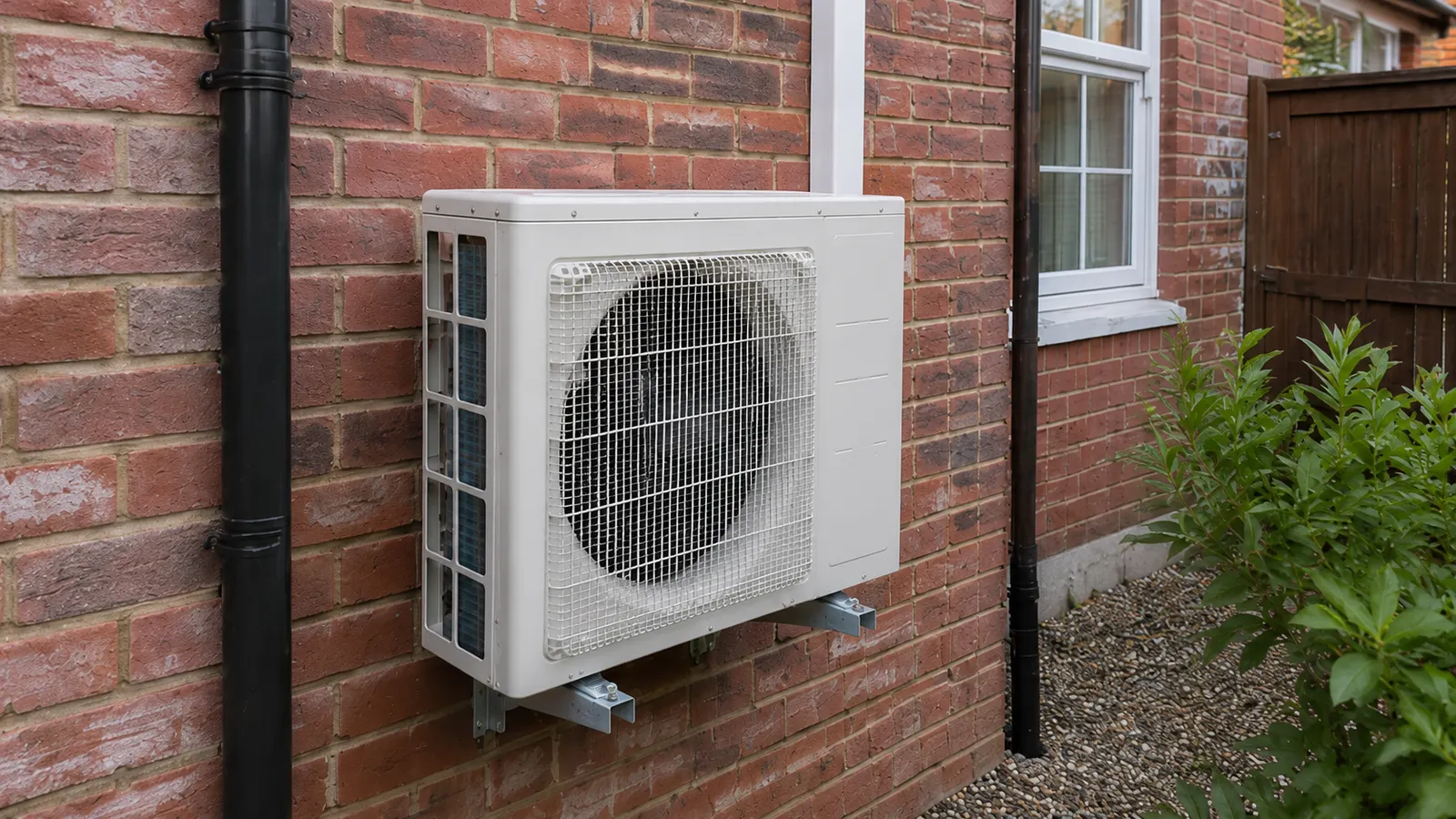
Replace a domestic split system at 12 to 15 years, or straight away if it runs on R22, because no engineer in the UK can legally recharge R22. Everything else is a judgement call, and the data plate on the outdoor unit settles most of it.
November is the month to deal with it. Installer diaries stay quiet until February, so a survey booked this week gets a fitting date in weeks rather than the months a June enquiry waits.
What actually wears out
A split system has few moving parts. The compressor in the outdoor unit, two fan motors, a control board at each end, and a sealed circuit of refrigerant between them.
Twelve to fifteen years is a fair expectation for a domestic unit in a UK home. We run cooling for a few hundred hours a year, not the thousands a Mediterranean house asks of the same kit, so the duty is light. Systems in shops and offices work harder and reach eight to twelve years.
Age on its own is a weak signal. Three things turn it into a decision: the refrigerant it holds, whether parts are still made for it, and whether it was fitted well in the first place. A 14 year old unit that holds its charge and still hits its setpoint owes you nothing.
R22 ends the argument
R22 was the standard refrigerant in air conditioning until the HCFC ban stopped new equipment in 2004. Those systems are now at least 22 years old, and plenty are still running in UK homes and small shops.
The dates that matter came later. Virgin R22 was banned for servicing work in 2010, and recycled or reclaimed R22 followed on 1 January 2015. Since then no F-Gas certified engineer can legally put R22 into a system, whatever the source. A sealed R22 unit may keep cooling for years, but the first leak is terminal. There is nothing to refill it with.
So treat an R22 system as a unit on borrowed time, and plan the replacement before a hot week forces it. Our guide to what F-Gas certification means explains who is allowed to touch the refrigerant circuit and why.
R410A sits in the middle
R410A replaced R22 and ran as the domestic standard until about 2018, when manufacturers moved to R32. R410A remains legal to buy and to put into a system. The F-Gas quota phase-down keeps cutting the volume allowed onto the market each year, which pushes the price per kilogram up, so the gas is getting dearer rather than disappearing.
An R410A system that works is worth keeping. One that has already lost its charge twice is worth replacing, because each repair buys time on a system that was built to older performance figures.
Check the data plate on the outdoor unit before you decide anything. It names the refrigerant and the charge weight in kilograms, and that one line tells you the generation of kit you own.
What a replacement costs
A replacement falls in the same brackets as a new install, taken from our prices page:
- One room: £1,800 to £2,800 fitted, including VAT.
- Two rooms on one outdoor unit: £3,500 to £5,500.
- Three rooms: £5,500 to £8,500.
Swaps land at the lower end of the bracket when the hard work is already done. The wall penetration exists, the condenser bracket and the pipe route are in place, the condensate drain runs where it needs to, and the electrical circuit is sitting there. Compare that with a first install, which pays for all of it.
Two items belong in the written quote. The old refrigerant has to be recovered by a certified engineer rather than vented, which is a criminal offence, and the old unit goes for WEEE recycling. Ask for recovery, removal and disposal to be itemised so it is not a line that appears on the day.
Cooler Spaces quotes for replacement installs, not for servicing or repairs.
When the old pipework can stay
This is the question that decides the price, and it turns on what the old system held.
Pipework from an R410A system can often stay. The installer checks the diameter matches the new unit, pressure tests the run with nitrogen, and reuses it. On a long or buried run that saves a day of disruption.
R22 pipework is different. R410A and R32 run at roughly half again the pressure of R22, and the old copper may not be rated for it. R22 systems used mineral oil, while current systems use POE oil, and mineral residue left in a pipe contaminates the new charge. Some installers flush and reuse, most price for new copper. Expect new pipework on any R22 swap, and read the quote rather than assuming.
What you gain beyond the gas
Plenty of pre-2010 domestic units cool only. A current system reverses and heats, which turns a summer-only box into something that earns its keep from October to March at a cost per unit of heat that beats an electric radiator. Our guide to heating with air conditioning has the running cost maths.
Running cost gives the honest answer here, and it is smaller than most sales patter suggests. A 3.5kW unit from 2010 costs around 28p an hour to cool at 24p per kWh, against about 19p for a current model. Across 300 hours of UK summer that is £27 a year, which never pays back a £2,300 install on its own. Heat mode changes the sum. A winter of heating on a modern SCOP figure costs roughly £100 a year less than the same heat from a 15 year old unit.
Quiet is the gain people notice most. A bedroom unit from 2010 sat around 32 dB on its lowest fan speed, where current models reach 19 to 22 dB. Our quietest units guide lists the figures, and the 2026 buying guide covers which brands suit which rooms.
Get a price for a replacement
Fill in the quote form and say how old the system is, which refrigerant the data plate names, and whether the pipework is accessible. Up to three vetted North West installers survey the property and come back with a fixed price within 24 hours.
Check the prices page for a bracket first, or email us if you want a second opinion on a quote you already hold.
Common questions
How long does a home air conditioning unit last in the UK?+
Twelve to fifteen years for a well-fitted domestic split system. UK homes run cooling for a few hundred hours a year rather than all summer, so the kit sees light duty. Hard-worked commercial systems reach eight to twelve years.
Can an old R22 system be topped up?+
No. Virgin R22 was banned for servicing in 2010 and recycled R22 followed on 1 January 2015, so no engineer in the UK can legally recharge an R22 system. If it holds its gas it can keep running, but the next leak ends it.
How do I know which refrigerant my system uses?+
Read the data plate on the outdoor unit. It names the refrigerant and the charge weight. R22 means pre-2004 kit, R410A means roughly 2004 to 2018, and R32 means a recent install.
What does it cost to replace an air conditioning unit?+
A single-room replacement runs £1,800 to £2,800 fitted including VAT, the same bracket as a new install, and lands at the lower end when the pipework and the electrical circuit can stay. Two rooms sharing one outdoor unit cost £3,500 to £5,500.
Is a new unit cheaper to run than a 15 year old one?+
Yes, though less than people expect on cooling. A 3.5kW unit from 2010 costs around 28p an hour to cool against 19p for a current model, which is about £27 a year. Heat mode is where the gap shows: a winter of heating can cost £100 a year less.
Ready for a real quote?
Get up to 3 fixed prices from vetted North West installers.
Air conditioning quotes near you
Local price guides and installer coverage across the North West.
More on Guides
Can you take air conditioning with you when you move house?
A fitted split system counts as a fixture, so it stays with the house unless you exclude it in writing before contracts. Here is what a strip-out and refit really costs against a fresh install, why the warranty does not travel, why the old pipework rarely fits the next house, and what to check if you are buying a home that already has air con.
Does air conditioning affect your home insurance?
A fitted split system rarely moves your premium, but it does belong on your insurer's record. Here is why a wall-mounted condenser is usually covered as part of the building while a ground-mounted one may not be, what the property in the open limit means, which paperwork settles a claim, and how much an install adds to your rebuild figure.
Can you buy your own air conditioning unit and pay someone to fit it?
Some installers will fit a unit you supplied. Most refuse, and the ones who agree charge a labour-only rate that leaves you £200 to £500 ahead on a job that costs £1,800 to £2,800 fitted. Here is why installers say no, what the November sale listings hide, and the one case where supply-only genuinely works.