
Which electricity tariff is cheapest for running air conditioning?
Air conditioning is a flexible load, so the tariff you sit on changes what heat mode costs you over a winter. Here is how single-rate, Economy 7, time-of-use and heat pump tariffs compare for a fitted split system, what the standing charge does to the maths, and the two schedule changes that pay for themselves.
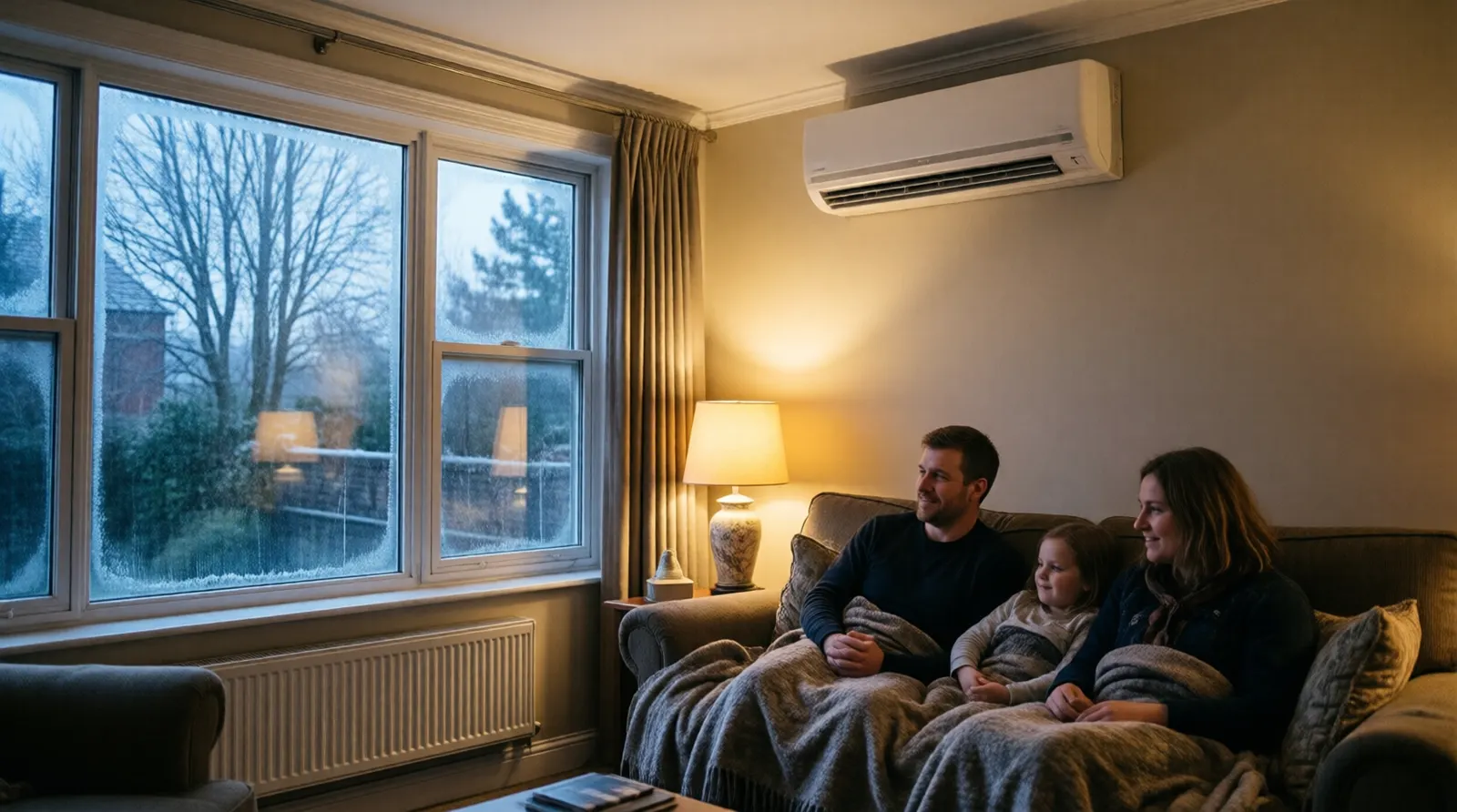
A competitive single-rate tariff near the 24p per kWh cap suits most homes running a split system. A time-of-use tariff beats it only when you can move the hours, and Economy 7 rarely works at all. The tariff question matters more for air conditioning than for a fridge or a washing machine, because heating and cooling are loads you choose the timing of.
Start with the unit rate, not the standing charge
Two numbers appear on every tariff. The standing charge is a daily fee you pay whether the unit runs or not, so it never changes what cooling or heating costs per hour. The unit rate does all the work.
Our cost per hour guide prices a 2.5kW split at 20 to 28p an hour on heat mode when it is 2C outside, and 18 to 24p an hour cooling on a hot day, both at 24p per kWh. Drop the unit rate to 21p and every figure in that guide falls by one eighth. Raise it to 28p and the lot climbs by a sixth.
So compare tariffs on the unit rate first, then check the standing charge against your total consumption rather than against the air conditioning.
Single rate: the baseline to beat
One price, all day, every day. Nothing to schedule and nothing to get wrong.
This is the right answer for most households with one or two splits. The unit runs for a few hours on winter evenings, which is exactly when a time-of-use tariff charges most, and the admin of chasing cheaper half-hours buys you very little.
A worked figure for the heating season. One 2.5kW split, four hours a day, 150 days from mid-October to mid-March, at 20 to 28p an hour, comes to £120 to £168 for the winter. Our guide on heating with air conditioning sets that against what the same warmth costs from gas.
Economy 7: cheap at the wrong time
Economy 7 gives seven cheap night hours and a day rate above the standard unit rate. That shape was built for storage heaters, which soak up heat at 2am and release it slowly.
A split system does not store anything. It heats the room while you sit in it, which means the evening peak, on the expensive day rate. The night window only helps if something in the house holds the energy: a battery charged overnight, or a very airtight new build that keeps a 21C room warm until morning.
For most homes on Economy 7, moving to a single rate cuts what the air conditioning costs.
Time-of-use tariffs: worth it if you can shift
Half-hourly tariffs price electricity by the period. They need a smart meter sending half-hourly readings, and they usually charge a premium between 4pm and 7pm with cheaper rates overnight and through the middle of the day.
Three patterns make them pay with air conditioning.
- A pre-heat before the peak. Bring the room to temperature by 3.45pm, then let the unit tick over. Setting that schedule in the app takes a minute, and our guide to app control covers how.
- Daytime use at home. A home office running 9am to 4pm sits almost entirely outside the peak.
- A battery. Charge overnight at the cheap rate, run the unit from it in the evening.
Without one of those, the peak premium cancels the off-peak saving. Shifting half your heating hours to an off-peak rate saves a household £30 to £50 across a winter, so this is a tidy gain rather than a different order of cost.
Heat pump tariffs: check before you switch
Suppliers sell discounted tariffs aimed at heat pump owners, and a fitted split system is a heat pump in all but name. The paperwork is the problem.
Most of those tariffs ask for evidence of an MCS-certified heat pump install, and a domestic air conditioning system is an air-to-air unit fitted outside that scheme by an F-Gas engineer. Our guide to what F-Gas certified means explains the difference in registration.
Terms vary by supplier and change often, so ring and ask whether an air-to-air split qualifies before you switch on the assumption that it does. Do not count on it when you work out what heat mode will cost you.
Solar, and the one tariff detail that matters
If you have panels, cooling lines up with generation and heating does not. July sunshine covers an afternoon of cool mode. A January evening on heat mode comes off the grid at the full rate. Our guide on solar panels and air conditioning works through both halves of the year, including when a battery earns its place.
What to do this month
Four steps, in order.
- Find your current unit rate on a recent bill, in pence per kWh.
- Multiply the hourly figures from our cost per hour guide by your rate over 24p to get your own numbers.
- Check whether you are on Economy 7 without storage heaters. If you are, get a single-rate quote.
- Only then look at a time-of-use tariff, and only if you can pre-heat before 4pm or have a battery.
The tariff is the smaller lever. Heating one room you are sitting in, rather than the whole house, saves far more than any switch, and a schedule set in October runs all winter without being touched.
Tell us on the quote form which rooms you want warm this winter and roughly what you pay per kWh. Up to three vetted North West installers survey and come back with a fixed price within 24 hours.
Check the prices page for a bracket first, or email us if you want the winter running cost worked through on your own tariff.
Common questions
Which electricity tariff is cheapest for air conditioning?+
For most homes, a competitive single-rate tariff near the 24p per kWh cap. A time-of-use tariff beats it only if you can move heating and cooling hours out of the 4pm to 7pm peak, or you have a battery to charge overnight. Economy 7 rarely suits a split system, because the cheap window falls when nobody wants the room warm.
Does air conditioning qualify for a heat pump tariff?+
Usually not. Most heat pump tariffs ask for evidence of an MCS-certified heat pump install, and a domestic split system is an air-to-air unit fitted outside that scheme. Ask the supplier before you switch, because terms differ and a few look at the appliance rather than the paperwork.
How much does a winter of heat mode cost?+
A 2.5kW split heating one room for four hours a day through a 150 day heating season costs roughly £120 to £168 at 24p per kWh. Shifting part of that load to an off-peak rate takes £30 to £50 off, which is real money but smaller than the saving from heating one room instead of the whole house.
Is Economy 7 worth it for air conditioning?+
Only with storage. The night rate is cheap, but a split system heats on demand in the evening, and the Economy 7 day rate sits above a standard unit rate. Without a battery or a well insulated fabric that holds overnight heat, the day rate costs you more than the night rate saves.
Does a smart meter change what air conditioning costs?+
Not on its own. A smart meter gives you access to half-hourly tariffs, and those tariffs are what change the cost. No supplier will put you on a time-of-use rate without half-hourly readings.
Ready for a real quote?
Get up to 3 fixed prices from vetted North West installers.
Air conditioning quotes near you
Local price guides and installer coverage across the North West.
More on Costs
Replacing storage heaters with air conditioning
A split system on heat mode delivers a unit of heat for around 8p against 12p to 16p from a night storage heater, and 28p to 34p when you press boost. Here is the room-by-room swap, the circuit the old heaters leave behind, why you should recheck Economy 7, and what one room costs at £1,800 to £2,800 fitted.
Heating with air conditioning: UK running costs vs gas
Can air con heat your home, and is it cheaper than gas? UK running costs per hour, when heat mode wins and when the boiler should take over.
Cost per hour to run air con in the UK in 2026
Real UK running costs for domestic air conditioning in 2026 - what it costs per hour on cool mode, heat mode, and idle. Broken down by room size.