
Air conditioning for a dental practice or clinic
A split system cools a surgery, a waiting room and a decontamination room, and heats them in winter for a third of the cost of electric panels. It does not supply fresh air, so it never counts towards the air changes an aerosol generating procedure needs. Here is what to cool, where to put the indoor unit, noise limits for a treatment room, and 2026 fitted prices.
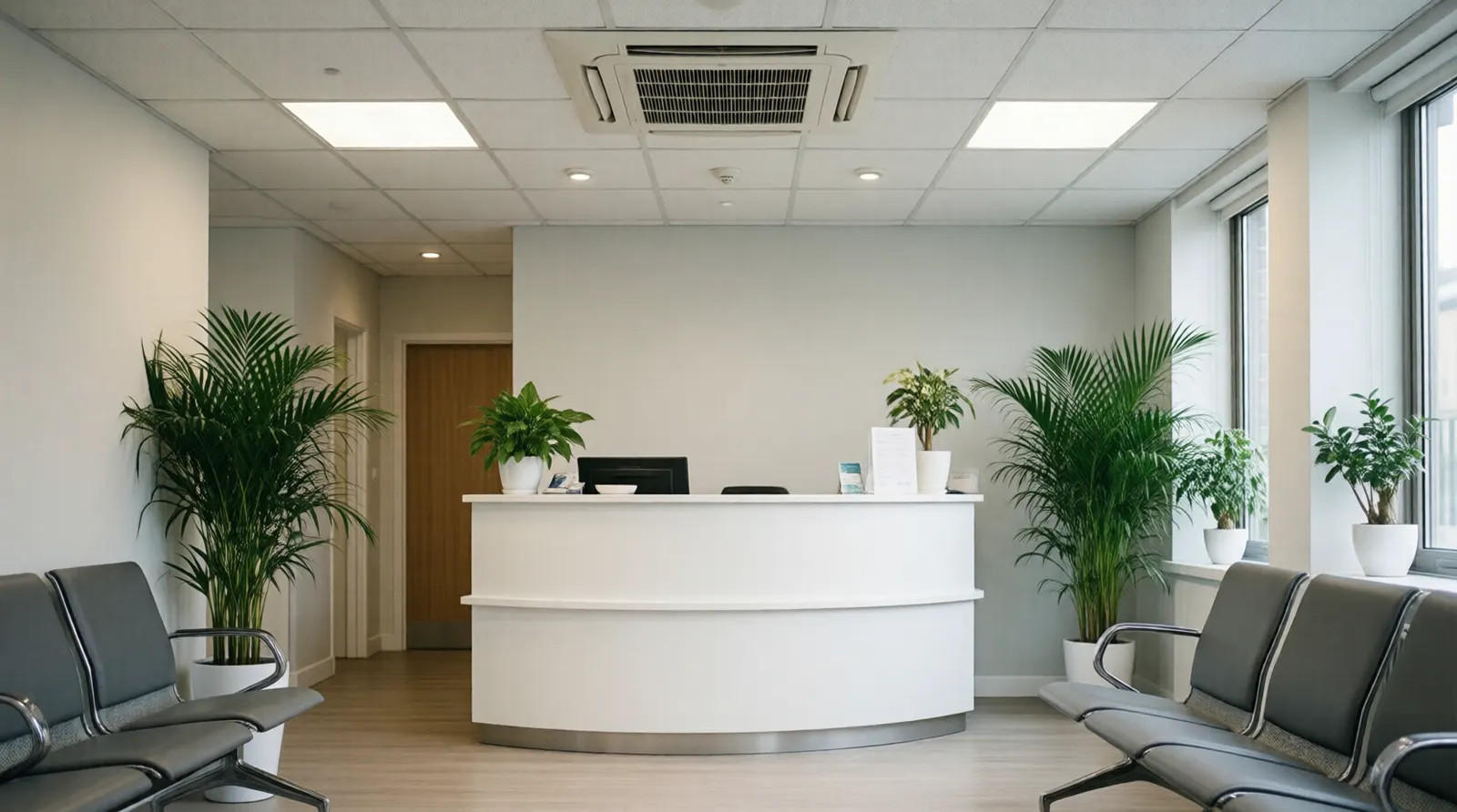
Air conditioning earns its place in a dental practice in three rooms: the surgery, where equipment and lighting push the temperature up while the clinician stands still in full PPE, the waiting room, which fills with people and empties again all day, and the decontamination room, which is usually the hottest space in the building. It does not ventilate any of them, and that distinction decides what you buy.
Late October is the sensible month to plan this. Installers have come off the summer backlog, lead times sit at two to three weeks, and a January install misses nothing clinical.
Cooling is not ventilation
A wall unit or cassette takes the air in the room, passes it over a cold coil, and blows it back. No outside air enters. The system cools, heats and dehumidifies, and it contributes nothing to air changes per hour.
Guidance on aerosol generating procedures in dentistry is written in air changes, and 10 changes an hour became the figure practices were asked to work towards. Those changes come from mechanical extract, a supply system, or an openable window with a measured flow rate. A split system supplies none of them, and no installer should imply otherwise.
The two jobs sit alongside each other. Ventilation clears aerosol between patients. Air conditioning stops the room reaching 28C in July with the window shut and the curing light on. Treat them as separate line items and the spec stops being confusing.
Room by room
The surgery is a small room with a large heat load. A chair, a compressor line, monitors, a surgical light and two people in masks and visors add up fast. A treatment room of 12 to 16 square metres typically wants 3.5kW of cooling where an office of the same size would take 2kW. Each surgery needs its own indoor unit and its own setpoint, because one clinician runs warm and the next runs cold.
The waiting room swings. Empty at nine, twelve people in coats by half past. Size it for the full room and let inverter control throttle back when it is quiet.
The decontamination room gets forgotten. A steriliser dumps heat into a small space with the door shut, and staff work in there in gloves. It is often the one room where the thermometer reads 30C in March. A small wall unit fixes it.
The practice manager’s office and any lab space are a normal small commercial job.
Noise matters more here than anywhere else
Patients arrive anxious. A fan ramping up in a treatment room registers.
Premium wall units reach 19 to 22 dB at their lowest fan speed. That is below the sound of breathing. The way to stay there is capacity: a unit sized with headroom holds the room on low fan, while an undersized one sits at full speed through every appointment. Our guide to air conditioning noise sets out what the decibel figures mean in a real room.
The outdoor unit needs the same thought if the practice sits in a terrace of shops with flats above. Position, mounting and the one metre boundary rule all come into it.
Positioning in a treatment room
Airflow should never cross the operative field. Mount the indoor unit so the throw runs the length of the room, not down onto the chair, and keep it clear of the instrument tray.
The corner behind the headrest and the wall above the door are the two positions that usually work. Ask the installer to walk the room with whoever owns your infection control policy before anyone drills anything. Ask which filters the model uses and how they come out, because a treatment room is a room where that question gets asked by inspectors.
Cassettes suit reception and a wider waiting room, where a four-way throw spreads the air without a visible box on the wall.
Winter is half the reason to fit it
A practice is open from eight in the morning. In January the waiting room starts cold and the reception desk sits by the front door.
There is no legal maximum working temperature in the UK, as our guide to workplace temperature law explains, but the Approved Code of Practice puts the normal minimum at 16C for sedentary work. A reception desk in a draught fails that for the first hour of the day more often than any surgery overheats.
In heat mode a split system returns around three units of heat for every unit of electricity. A 3.5kW output costs roughly 28p an hour at 24p per kWh, against 84p an hour from 3.5kW of electric panel heaters. Across a five month heating season in four rooms, that gap pays for a fair share of the install. Our post on heating with air conditioning works the full comparison through.
What it costs in 2026
One area, whether that is reception or a single surgery, runs £2,500 to £4,500 fitted. A three or four surgery practice with reception and a decontamination room sits at £5,000 to £12,000, driven by the number of indoor units and the pipe runs between them and the condenser.
Most practices lease their premises. The alterations clause governs the work and the condenser usually lands on retained structure, so a licence to alter comes before the install date. Read our guide to fitting air conditioning in a leased commercial unit and allow four to six weeks for the paperwork.
The spend qualifies as an integral feature for capital allowances, and our post on claiming air conditioning against tax runs the net cost after relief.
Get quotes for your practice
Tell us on the quote form how many surgeries you run, the floor area of each, whether the building is leased, and what ventilation the treatment rooms already have. Up to three vetted North West installers survey the premises and come back with a fixed price within 24 hours.
Check the prices page for a bracket first, or email us if you want to talk through which rooms to tackle first.
Common questions
Does air conditioning count as ventilation in a dental surgery?+
No. A standard split system recirculates the air already in the room. It cools or heats that air and removes moisture from it, and it brings in no outside air at all, so it adds nothing to the air changes per hour a treatment room needs between aerosol generating procedures. Ventilation comes from an extract or supply system, or from an openable window. Cool the room with one, ventilate it with the other.
How much does air conditioning cost for a dental practice?+
£2,500 to £4,500 fitted for one area such as reception or a single surgery. A three or four surgery practice with reception and a decontamination room runs £5,000 to £12,000, because each room wants its own indoor unit and its own control. Final figures come off a survey of the building, not a room count.
How quiet does the indoor unit need to be?+
Quiet enough that a nervous patient does not notice it. Premium wall units run at 19 to 22 dB on their lowest fan speed, which sits below normal breathing. Size the unit generously so it holds temperature on low fan instead of cycling up to full speed mid-appointment.
Where should the indoor unit go in a treatment room?+
Away from the chair, and never blowing across the operative field. Mount it so the airflow runs along the room rather than down onto the patient or the clinician's hands. The corner behind the chair or the wall above the door usually works, and your installer should agree the position with whoever holds your infection control policy.
Can the practice claim the install against tax?+
Air conditioning counts as an integral feature, so it goes in the special rate pool, and the Annual Investment Allowance normally absorbs the whole cost in the year you buy it. A practice paying 25% corporation tax gets a £7,000 install down to £5,250 net.
Ready for a real quote?
Get up to 3 fixed prices from vetted North West installers.
Air conditioning quotes near you
Local price guides and installer coverage across the North West.
More on Commercial
Air conditioning for a pharmacy or dispensary
Most medicines are labelled to be stored below 25C, and the dispensary is the room that breaks that line first. Here is which rooms to cool and in what order, why cooling does nothing for ventilation in a consultation room, what room temperature does to a pharmacy fridge, and 2026 fitted prices.
Air conditioning for a holiday let or Airbnb
Air conditioning in a holiday let protects your summer reviews and sells winter nights the cottage used to lose. One bedroom runs £1,800 to £2,800 fitted and a bedroom plus living space £3,500 to £5,500. Here is which rooms to cool first, why the April 2025 tax change matters, how to stop guests running it with the windows open, and the condenser rules in a village or a block.
Air conditioning for a workshop or small industrial unit
Air conditioning heats and cools the parts of an industrial unit people actually stand in: the trade counter, the mezzanine office and an insulated workshop bay. Here is what it will and will not handle, the winter temperature duty that catches landlords and employers out, running costs against gas and electric heaters, and 2026 fitted prices.